Resilience In The Rockies
Resilience In The Rockies is a waterloop series about how Colorado communities are using water conservation as water supply. The series is a collaboration with WaterNow, a national nonprofit that works with local leaders to advance innovative and climate-resilient water strategies. Through its Project Accelerator, WaterNow has helped dozens of Colorado communities design and scale water-efficiency projects. Resilience In The Rockies highlights those efforts and shows how targeted assistance can help drive action.
The series is made possible in part by a grant from the Colorado Water Conservation Board, with support from PCL Construction, Norris Design, Merrick, and the City of Greeley.
Rethinking Colorado Lawns | Resilience In The Rockies
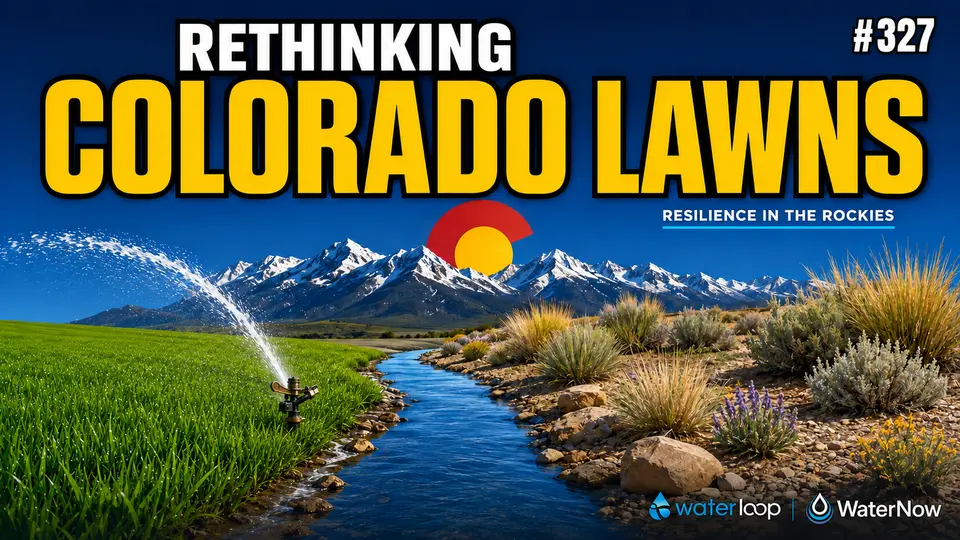
Colorado communities adapting to the long-term strain on water supplies in the arid West are turning one of their largest demands—the irrigated landscape—into a source of new supply, with this year’s historically low snowpack adding urgency to the work.
The first episode of Resilience in the Rockies travels from the Front Range to the Western Slope to examine how local leaders, utility managers, landscape professionals, and residents are replacing thirsty turf with landscapes designed for Colorado’s climate.
In Westminster, where about half of the city’s drinking water is used outdoors, a prominent transformation at City Hall is expected to save at least 1.5 million gallons annually while adding native grasses, pollinator habitat, walking connections, and climate-appropriate plants grown at the city’s own greenhouse.
At the University of Northern Colorado in Greeley, nearly 3.5 acres of lightly used lawn have been redesigned with gathering areas, shade, native vegetation, and more precise irrigation—a project expected to conserve nearly 2 million gallons each year.
Longmont is using GIS mapping to locate nonfunctional turf and rank potential projects according to water savings, heat vulnerability, air quality, irrigation source, community value, and opportunities to coordinate with other construction.
That data-driven approach helped shape Kensington Park, where residents selected plants and amenities and helped install a water-wise garden around a neighborhood memorial previously damaged by irrigation.
In Eagle County, the Beyond Lawn program pairs rebates with on-site evaluations, irrigation guidance, customized conservation plans, and contractor or do-it-yourself resources, helping replace 60,000 to 70,000 square feet of turf and save about four acre-feet of water annually.
Together, the projects show that outdoor conservation succeeds when communities move beyond simply removing grass and create landscapes that are useful, attractive, locally appropriate, and supported over the long term.
Governing For Gallons In Colorado | Resilience In The Rockies
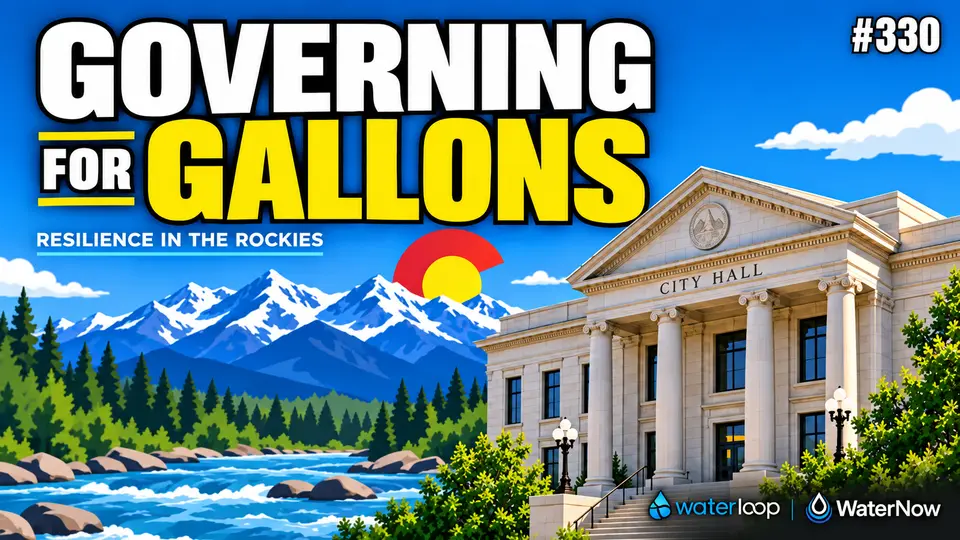
Policy is becoming a water-supply tool in Colorado, as local governments use development codes, financing rules, and workforce requirements to reduce demand.
The second episode of Resilience in the Rockies examines how Broomfield, Denver Water, and Aspen are using governance to move conservation projects forward.
In Broomfield, where landscape irrigation accounted for an estimated 60 to 70 percent of annual water demand, a 2023 ordinance limits turf to 30 percent of new landscapes and caps outdoor use at 12 gallons per square foot annually.
The city developed the code after a WaterNow workshop and consultation with residents, elected officials, landscape architects, and homeowners associations.
Denver Water worked with WaterNow to finance more than half a billion dollars in replacements of customer-owned lead pipes—a type of private property investment that utilities traditionally could not place on their books or support with tax-exempt debt.
The resulting accounting and IRS approvals established a model Denver Water is now testing for turf removal and considering for watershed protection.
Aspen requires qualifying landscapes to meet water budgets, use efficient irrigation, and pass third-party audits because the headwaters community depends on snowpack and has only a few days of municipal storage.
To make the code enforceable in practice, WaterNow has helped Aspen train more than 100 landscape and irrigation technicians since 2018.
In each case, decisions about land use, public finance, and implementation are converting conservation goals into projects with measurable water-supply benefits.
Connecting People To Conservation | Resilience In The Rockies
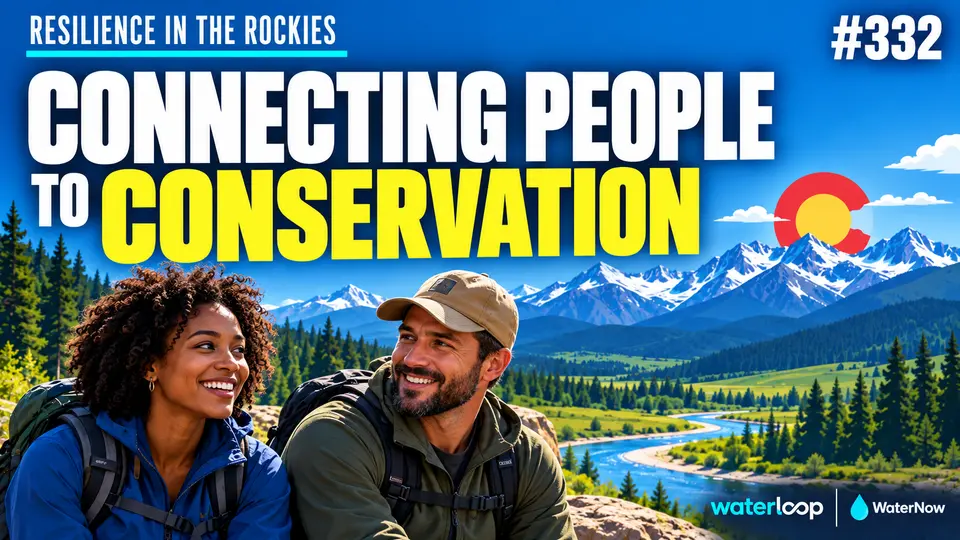
Colorado communities are treating public engagement as water infrastructure, using trusted messengers, targeted outreach, and practical programs to turn conservation strategies into action.
The third episode of Resilience in the Rockies examines how Summit County, Boulder, and Aurora are reaching people who can determine whether water-saving programs actually work, plus how technical assistance from WaterNow enables the programs.
In Summit County, High Country Conservation Center helps connect more than 15 water providers, several mountain towns, residents, businesses, and landscapers through rebates, irrigation assessments, training, and demonstration gardens.
That regional role matters because local utilities often lack the staff capacity to design and run conservation programs while also operating treatment plants, repairing leaks, and serving customers.
Boulder is taking a different approach as it rethinks how to reach a community where more than half of residents are renters and the University of Colorado brings roughly 40,000 students with widely different connections to local water issues.
After reducing per-capita water use by about 30 percent since 2002, the city is developing a new conservation communications strategy that focuses on people often missed by traditional government outreach.
That work includes plain-language communication, translation, accessibility for people using assistive devices, and more deliberate outreach to residents who may not already have strong connections to city government.
In Aurora, where more than 180 languages are spoken, the challenge is building understanding of water reuse in a city that imports water from several major river basins and relies on Prairie Waters to stretch existing supplies.
Aurora Water, Metro Water Recovery, and the Aurora Health Alliance are working with public health professionals as trusted messengers, giving them direct exposure to drinking water treatment, wastewater processes, and reuse so they can answer questions from patients and community members with greater confidence.
Across all three communities, the lesson is that conservation programs become more effective when people understand the choices in front of them, trust the information they receive, and have a clear path to act on it.
Finding Dollars For Drops | Resilience In The Rockies

Saving water is one challenge; finding the money to build conservation projects is another.
The fourth episode of Resilience In The Rockies examines how Colorado communities are assembling federal, state, local, and private funding to turn water-efficiency ideas into infrastructure, with WaterNow helping local partners identify opportunities, navigate complex grant programs, and strengthen applications.
Along the Rio Grande near Del Norte, partners combined a $1.2 million Bureau of Reclamation WaterSMART grant with state funding, private philanthropy, and contributions from water users to modernize the Farmers Union diversion, which serves 12 other ditches.
The rebuilt diversion improves agricultural water delivery while adding fish passage, automated head gates, streambank stabilization, and aquatic habitat—giving multiple interests a reason to invest in the same project.
In Alamosa, a failing irrigation system at Cattails Golf Course had pushed a planned city project to about $1.3 million, until a $500,000 WaterSMART grant helped close the funding gap.
The upgrade replaced more than 10,000 feet of leaking pipe and added precise irrigation controls that allow staff to reduce watering in roughs and other lower-priority areas during drought; the city says the system has been saving about a dozen acre-feet of water annually in recent dry years.
Greeley faced a much larger infrastructure problem as aging meter batteries began failing across a system with roughly 29,000 meters, leaving the utility with estimated readings and little ability to spot leaks quickly.
About $3.5 million in federal WaterSMART grants helped accelerate Greeley’s move to advanced metering infrastructure, giving the utility 15-minute usage data, improving meter accuracy, reducing manual reading routes, and giving customers much faster information about leaks and their own water use.
Across the three projects, the lesson is straightforward: conservation is infrastructure, and expanding it at meaningful scale requires capital, partnerships, staff capacity, and often outside expertise to help communities compete for the funding that makes projects possible.

The Golden State of Reuse


