

 Spotify
 Apple Podcasts
 Youtube Music
 Amazon Music
 Audible
 Nanobubbles Are Transforming How Water Works
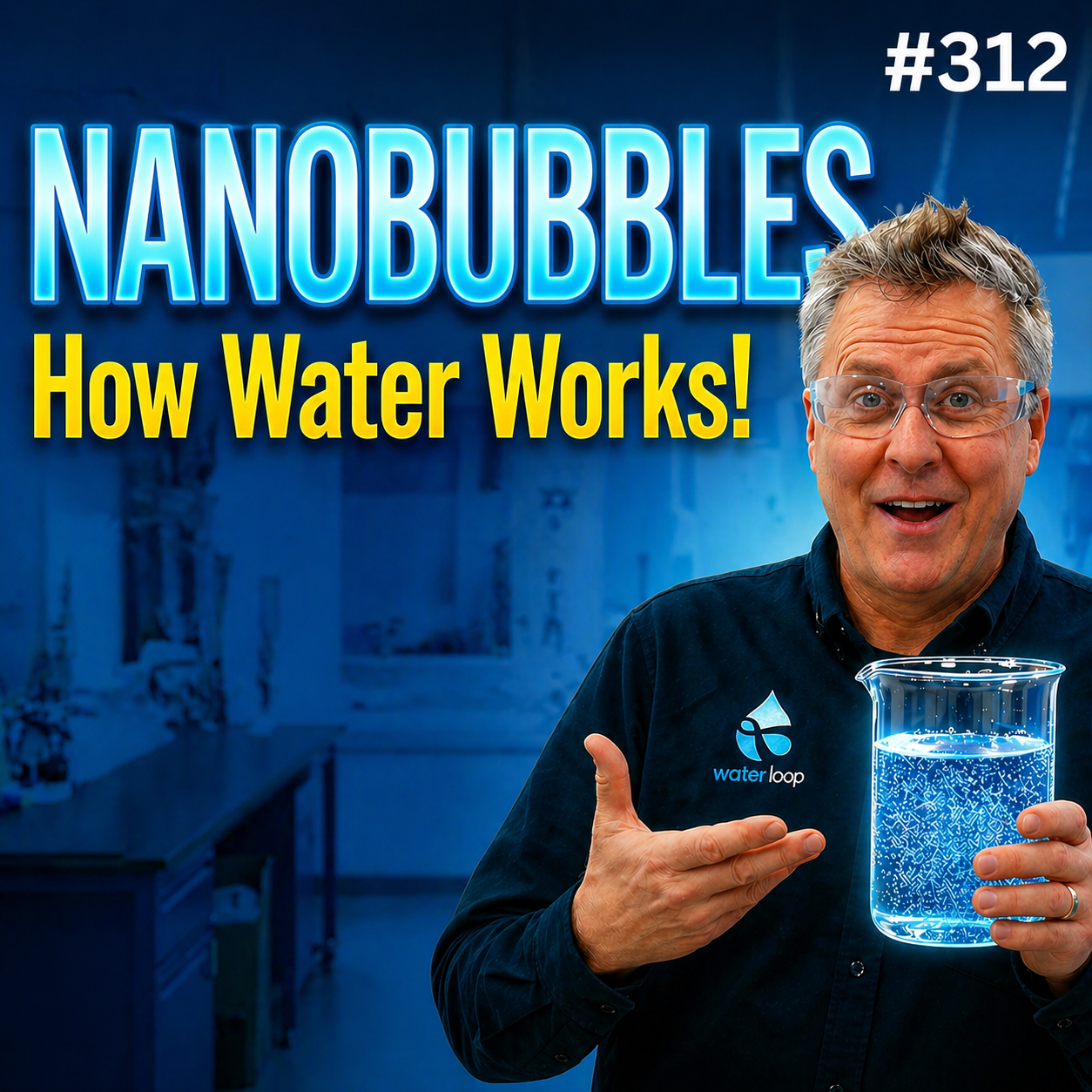
Nanobubbles—microscopic pockets of gas invisible to the human eye—are emerging as a powerful tool to improve water treatment and management.
In this episode of How Water Works, Travis Loop visits Moleaer Inc. in Los Angeles to break down how nanobubbles work and why they’re gaining traction across industries.
Thousands of times smaller than a grain of salt, nanobubbles don’t rise and burst like ordinary bubbles—they remain suspended for months, increasing dissolved oxygen and enhancing biological activity in water.
Inside the lab, experiments show how these charged particles scatter light, stabilize gases, and attract contaminants—helping water become clearer and cleaner.
The impact is already showing up in the field.
➡️ Through collaborations with Xylem, U.S. wastewater utilities are reducing ammonia and cutting aeration energy.
➡️ In South America, greenhouses are lowering chemical use while increasing yields.
➡️ Nordic aquaculture operations are improving fish survival.
➡️ In California\'s Lake Elsinore, the technology has helped control harmful algal blooms, reopening the lake for recreation and driving renewed economic activity.
Still early in its adoption, nanobubble technology is moving quickly from experimentation to real-world deployment—offering a lower-energy, lower-chemical approach to treating and managing water.
waterloop is a nonprofit news outlet exploring solutions for water sustainability.